
For years, I carried a quiet confidence that women were well informed about their choices—contraceptives, family planning, and safe abortion services. That confidence crumbled in Pokhara, where my residency in a family planning center unveiled the silence, misconceptions, and barriers still surrounding women’s health.
One day, I met a 16-year-old unmarried girl in my OPD who was 24 weeks pregnant. What startled me most was that this was her first contact with a health facility during her pregnancy—and she had not even known she was pregnant until her test at the center. Had she sought care earlier, she could have safely chosen abortion, considering her young age, health, and aspirations. Her life and dreams still lay ahead, but by the time she reached me, it was already too late. At 24 weeks—long beyond the point when safe abortion was legally possible (up to 12 weeks)—counseling was the only support I could provide. As I informed her of the pregnancy, I saw her face clouded with anxiety, bewilderment, and confusion—caught in a reality she was not ready to accept.
The very next morning, I encountered a different but equally heartbreaking case. A 47-year-old woman, mother of four children, came in with a positive pregnancy test. Unlike the teenager, she was devastated—not because she lacked children, but because her family was already complete. The thought of her teenage children discovering their mother’s pregnancy at this age filled her with shame. Yet, unlike the young girl, she had come early in her pregnancy, and I was able to counsel her on safe abortion as an option. Relief washed over her face as she realized she had choices available.
These experiences unsettled me deeply. If this is the reality in a developed city like Pokhara—where education, services, and information are relatively accessible—what must it be like for women in rural Nepal? There, countless women continue to be left uninformed, powerless, and deprived of the ability to exercise their reproductive rights.
Over time, I realized that while many women were aware of contraception, they were hesitant—even ashamed—to discuss it openly. Using a condom, taking a pill, or receiving an injection—services freely available through government centers—felt more daunting to them than undergoing repeated abortions, often at the risk of their health. This painful irony brought tears to my eyes. Here were women in the prime of their lives, jeopardizing their health simply because of the stigma surrounding contraception. It stirred in me a renewed calling: even if just a single ripple in the vast ocean, I had to channel my medical knowledge towards awareness and women’s empowerment.
The reasons women seek abortions vary widely—economic hardship, social stigma, pregnancies out of wedlock, pressure from families, cultural taboos, gender preference, rape or incest, lack of access to family planning, contraceptive failure, or simply the desire to delay or space births. Each woman’s situation is unique, but the common thread remains: every woman deserves the right to choose, to be informed, and to be supported without judgment.
History reminds us of how far Nepal has come. Until 2002, abortion was illegal—and often punishable by imprisonment, with up to 20% of women in prison jailed for abortion-related reasons. Recognizing the catastrophic toll of unsafe abortions, Nepal’s Parliament passed the 11th Amendment to the Muluki Ain in March 2002, legalizing abortion under specific conditions. Implementation began in December 2003, with services rolling out in 2004. Further strengthening reproductive rights, abortion was legalized up to 18 weeks of gestation in cases of rape or incest, and at any time if the pregnancy poses a danger to the woman’s life or physical or mental health, or if there is a fetal abnormality—while firmly prohibiting sex-selective abortions.
Since legalization, Nepal has seen impressive strides in service accessibility. By 2021, approximately 1,516 health facilities were certified to provide safe abortion services, and over 4,500 clinicians (including ANMs, nurses, doctors, and OB/GYN physicians) were trained nationwide. These efforts have played a significant role in the sharp decline in maternal mortality—from 548 per 100,000 live births in 2000 to 151 per 100,000 in 2022.
Yet, law alone is not enough. Implementation remains uneven, and barriers persist—particularly for adolescents and marginalized groups. Stigma, financial constraints, and restrictive requirements like parental consent continue to deny many the care they need. It is unacceptable that abortion should ever be delayed or denied because of the inability to pay. Safe abortion cannot be separated from family planning. Abortion services without proper contraceptive counseling only perpetuate cycles of unplanned pregnancy. Post-abortion care must include accessible, respectful, and confidential family planning options—never forced, but always offered.
Equally vital is counseling. Every woman who seeks abortion deserves to be treated with respect, compassion, and dignity. Counselors must provide accurate information in simple language, maintain strict confidentiality, and support women in their decisions without judgment or coercion. Each woman’s journey is different, shaped by her social, cultural, and personal realities—and health workers must meet her with empathy, not prejudice.
Each year, the World Health Organization (WHO) estimates that nearly half of all pregnancies worldwide—about 121 million—are unintended (WHO, 2022). Of these, around 25 million result in unsafe abortions annually, accounting for almost 45% of all abortions (WHO, 2017). Unsafe abortion alone contributes to 4.7%–13.2% of maternal deaths globally (WHO, 2021), and adolescents as well as women under 25 remain disproportionately affected (WHO, 2022). More broadly, the United Nations reports that every two minutes, a woman dies from causes related to pregnancy and childbirth (UNICEF, WHO, UNFPA, World Bank Group, 2023). These are not just statistics—they are lives lost to silence, stigma, and neglect.
These numbers are a stark reminder that unsafe abortions and maternal deaths are not inevitable—they are preventable. Safe abortion is not just a medical service—it is a fundamental human right, an essential part of safe motherhood, and a cornerstone of women’s empowerment. With comprehensive sexual and reproductive health services, access to modern contraception, safe abortion where legal, and respectful maternity care, millions of lives can be saved. No woman should lose her life because her pregnancy was unintended, her choices unheard, or her care unsafe. For Nepalese women—and women everywhere—it is time we break the silence, confront the stigma, and ensure that every woman has the choice, the care, and the dignity she deserves.
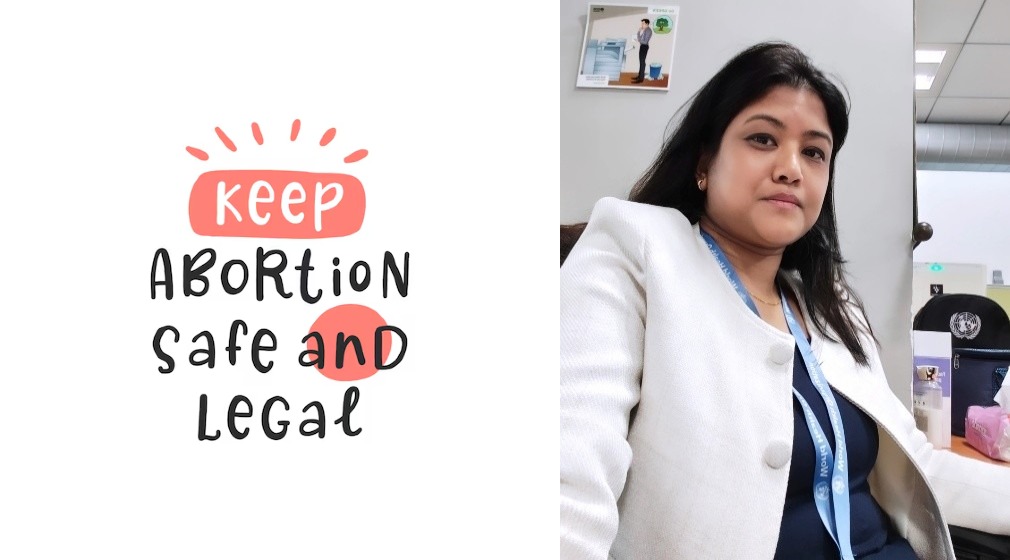
Dr. Alisha Manandhar (MBBS, MD) is currently working at the WHO Regional Office for South-East Asia in the Maternal and Reproductive Health Unit.
swasthyaadmin
Published: October 19, 2025